The reading list
Essays, tech notes, and the in-between.
- AI·3 min read
Why Your Legacy React Codebase Confuses AI Coding Agents
AI agents stumble on mature codebases because they have accreted multiple valid answers to the same question — and an agent has no way to know which one is current.

- technical-notes·3 min read
Entity resolution for guests: fuzzy matching first, LLM disambiguation second
The same person shows up as 'Bibhusan Bista', 'Bibhusan B.', and 'B. Bista' across three episodes. Don't ask the LLM first — try cheap deterministic matching, then escalate only the ambiguous cases.

- Technical Notes·3 min read
Structured extraction with Pydantic + Claude: guests, topics, and quotes from raw transcripts
Schema-first prompting with Pydantic + Anthropic tool use, a Haiku triage pass that gates Sonnet extraction, prompt caching for the system block, and a single retry that feeds the validation error back into the prompt.
- technical-notes·3 min read
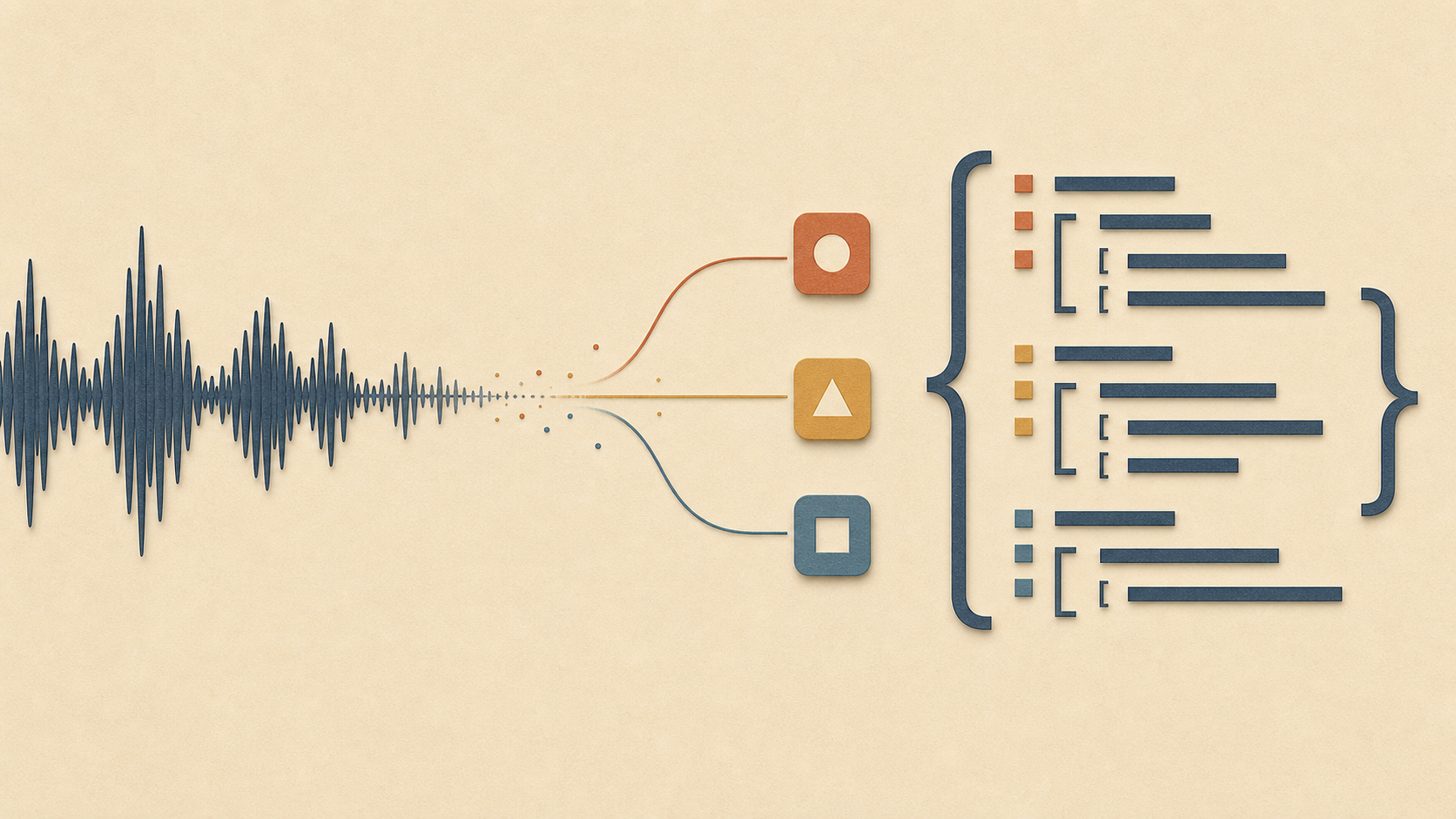
Ingesting YouTube transcripts: yt-dlp for subs, Whisper when subs don't exist
YouTube's Data API gives you channel discovery but not third-party caption text — that endpoint is OAuth-only in practice. The honest pipeline is yt-dlp in subs-only mode for captions, and local Whisper as a deeper fallback when no captions exist at all.

- AI·3 min read
Building Model-Agnostic Workflows
The model you use today will not be the best model in 12 months. Write your workflow so that switching costs hours, not weeks.
- AI·3 min read
Local Models: When You Run the Weights Yourself
Your code never leaves your machine. No API costs. No rate limits. The tradeoffs are real, but for the right use case, running local models is the right call.
- AI·3 min read
GLM Models: The Open-Source Alternative from Zhipu AI
GLM-4 and CodeGeeX aren't widely discussed in Western developer circles. They should be. Open weights, strong multilingual coding, and a dedicated IDE extension that's genuinely good.
- AI·3 min read
DeepSeek for Developers: Capable, Cheap, and Worth Knowing
DeepSeek-V3 matches Claude Sonnet on many coding benchmarks at roughly 10x lower API cost. Here's what it's actually good at, where it falls short, and what you need to know about data residency.
- AI·3 min read
Claude Models Explained: Opus, Sonnet, Haiku for Coding
Opus for architecture, Sonnet for execution, Haiku for the fast repetitive stuff. And prompt caching that makes the pricing math work in your favour.
- AI·3 min read
Token vs Subscription: Which AI Pricing Model Is Right for You
The break-even math is simpler than you think. Light users overpay on tokens. Heavy users overpay on subscriptions. Here's how to figure out which side you're on.