The reading list
Essays, tech notes, and the in-between.
- AI·3 min read
design.md for a Chakra UI v3 Codebase: Recipes, Tokens, Rules
Chakra v3 changed the game with recipes and semantic tokens. Here is the complete design.md that takes advantage of both — copy, swap your brand, ship.

- technical-notes·3 min read
Building a provider-switching LLM client: one interface, three providers, task-tier routing
A small adapter package lets you swap Anthropic, OpenAI, and local Ollama via an env var, route cheap classification to Haiku and synthesis to Opus, and add prompt caching without touching call sites.

- AI·3 min read
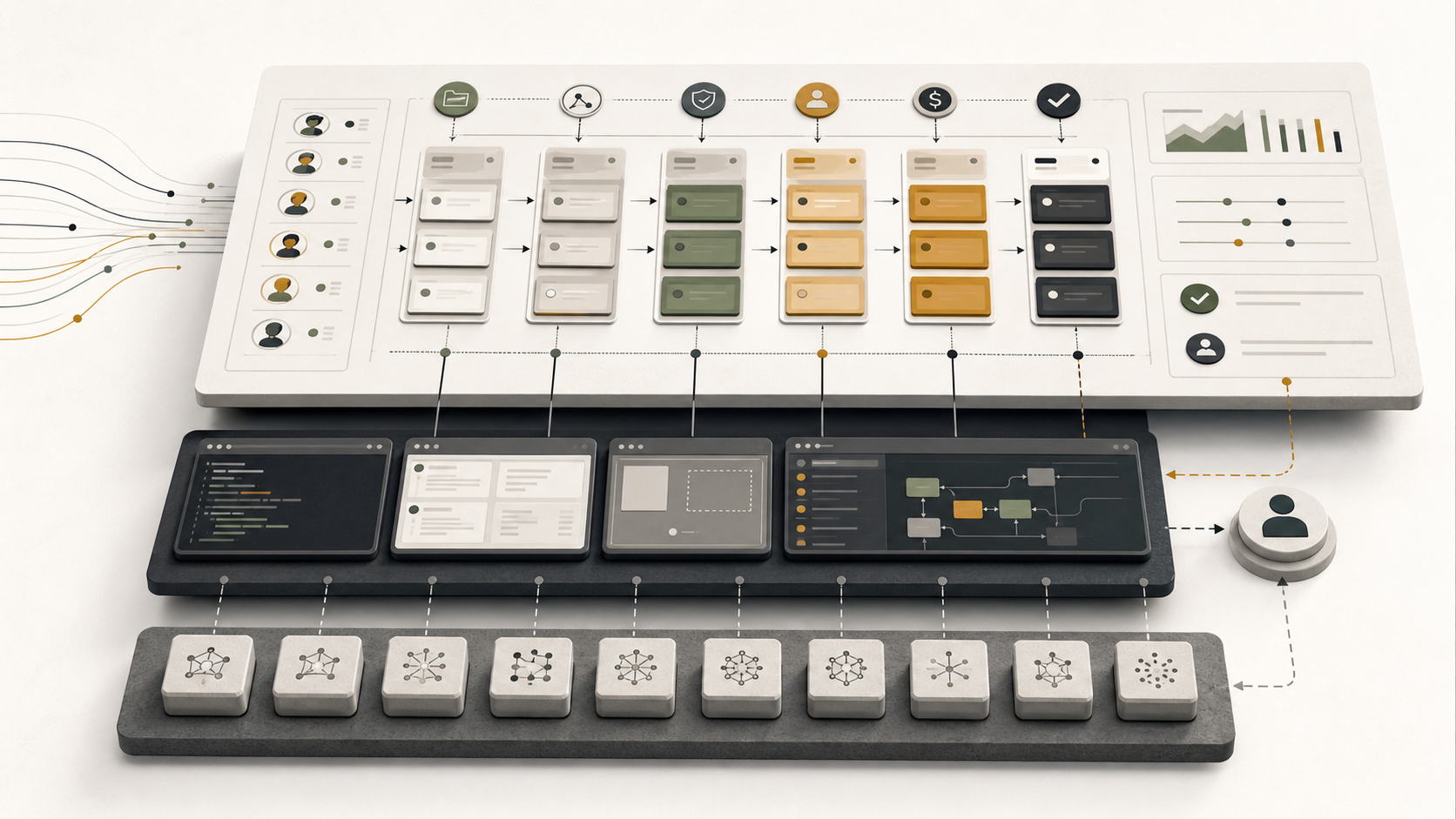
The Quiet Platform Shift: Why Orchestration Layers Like Multica and Paperclip Matter More Than the Next Model
Every conversation about AI in software has quietly moved one altitude up. The interesting question is no longer which model — it's what runs above them. A survey of agent orchestration platforms, from Multica and Paperclip to CrewAI, LangGraph, MetaGPT and ChatDev, and a light forecast of where this is heading.
- AI·3 min read
My AI Toolkit, Four Weeks In: Models, Harnesses, and Everything Else I Actually Reached For
A no-marketing inventory of the models, agent harnesses, and supporting tools I used day-to-day over the last four weeks — what each is good at, what it isn't, and what I'd reach for first next time.

- AI·3 min read
design.md for an MUI Codebase: A Concrete Template
Part 4 was the meta-template. This is the full design.md for an MUI v6+ codebase — every token, variant, and rule, ready to copy.

- AI·3 min read
Session-Start Hooks That Pay for Themselves
Zero ongoing cost. Measurable improvement on every interaction. The underused feature of modern coding agents — what to put in it, and what not to.

- AI·3 min read
Writing Task-Specific Agent Prompts That Work First Try
If design.md is the agent's memory, task prompts are its muscle memory — the highest-leverage agentic asset you can build, and the most underused.

- AI·3 min read
What to Put in design.md: A Complete Template
A good design.md is a decision document, not a style guide. If a senior designer left tomorrow, would the next person make the same calls?
- AI·3 min read
Rules That Agents Actually Follow: Enforcement Over Aspiration
A perfectly written CLAUDE.md cannot fix a contradictory codebase. The most effective rules file is short, opinionated, and backed by tooling.
- AI·3 min read
A 3-Week Plan to Make Your Legacy React Codebase Agent-Ready
Three weeks, one engineer, one opinionated order. Stop the drift, collapse the duplicates, and let the rules you already have actually start working.