What to Record in a Portable Player Battery Test
A runtime number becomes useful when the playback conditions, endpoint, and device configuration are recorded.
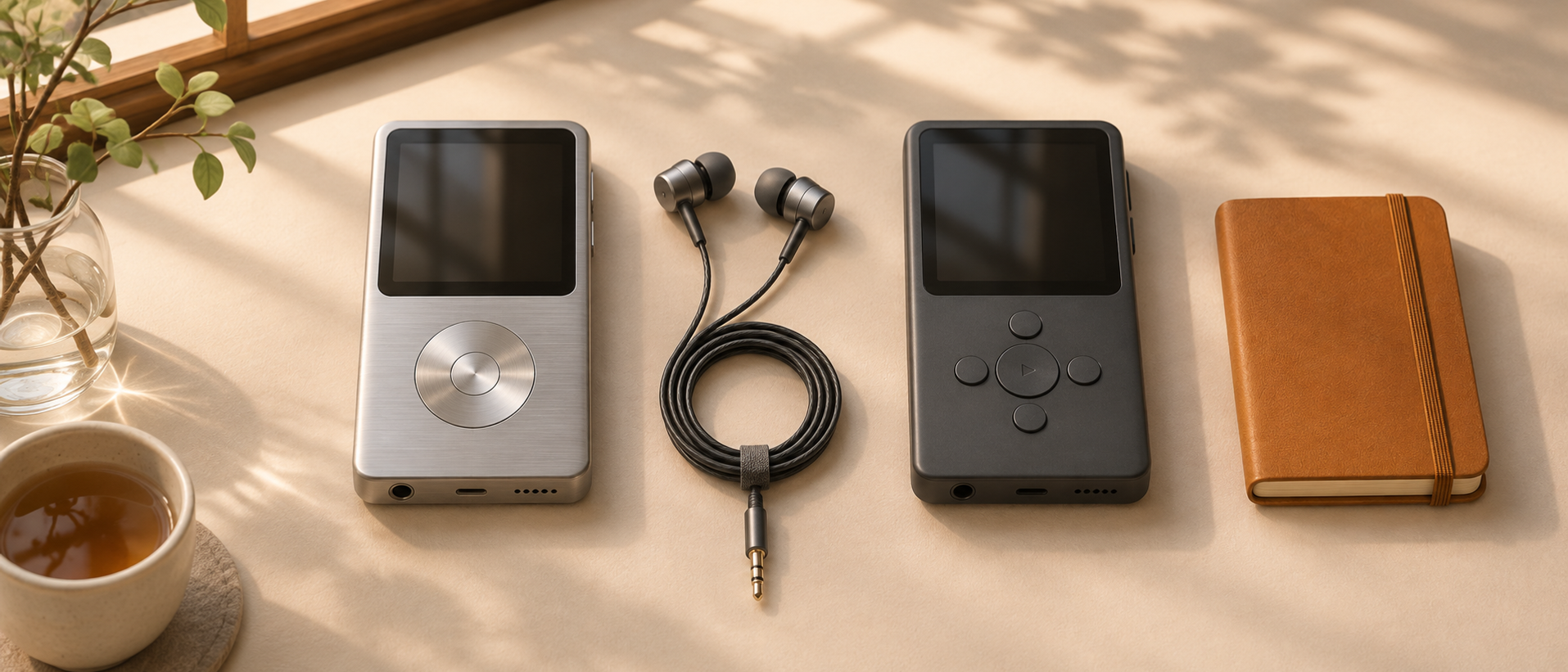
“The battery lasted all day” is a useful personal impression. It is not a reproducible runtime result. If you want to compare two runs, the conditions around the number matter as much as the number itself.
This is a recording method, not a new battery measurement or a promise about a particular device.
Identify the unit
Record the player, firmware, storage configuration, and battery information you actually know. For a modified or older device, avoid assuming the battery matches its original specification.
If capacity or age is unknown, write unknown. A guessed value can make a later comparison look more controlled than it was.
Define the start
Describe how charging was completed and when playback began. Keep the charging procedure consistent across runs where practical. Record whether the device was already warm or had been doing other work.
Do not turn the test into a hardware stress exercise. Follow the device and battery manufacturer’s handling guidance, and stop if the unit behaves abnormally.
Record playback conditions
Note the files or playlist, output device, volume setting, processing settings, wireless state, and screen behavior. These details help explain differences between runs without pretending to isolate every variable.
A volume number is specific to that device’s controls. Do not treat the same displayed number on another player as an equivalent listening level.
Choose the endpoint in advance
Decide what ends the run: automatic shutdown, a particular low-battery indication, or a fixed observation window. Keep that endpoint consistent when comparing results.
If you stop early, report the elapsed listening time and the reason. Do not extrapolate a full runtime from an incomplete run without clearly labeling it as an estimate and explaining the assumptions.
Keep the raw record
Save start and end timestamps, interruptions, and any unusual behavior. Retain earlier runs rather than replacing them with the latest result. A comparison is easier to trust when the original observations remain available.
Repeat when the decision depends on a small difference. One run can be affected by conditions you did not control, and an older battery can vary in ways a tidy table hides.
The useful conclusion stays close to the evidence: this unit, under these conditions, reached this endpoint after this elapsed time. That is a solid basis for deciding whether it suits your listening routine without turning one afternoon’s observation into a universal specification.

Keep reading
Keep Listening Notes Without Turning Music into Homework
Use a few concrete observations to remember an album and decide what to revisit.
Build a Music Discovery Queue You Will Actually Finish
Separate recommendations from commitments and keep the active listening queue deliberately small.
Back Up the Music Library Around What You Cannot Recreate
Include playlists, metadata, artwork, and configuration alongside the audio files, then test a small restore.
What did you take away?
Thoughts, pushback, or a story of your own? Drop a reply below — I read every one.
Comments are powered by Disqus. By posting you agree to theirterms.