How to Compare Two Music Players Without Losing the Plot
A practical listening worksheet that keeps sound impressions, everyday usability, and measured results separate.
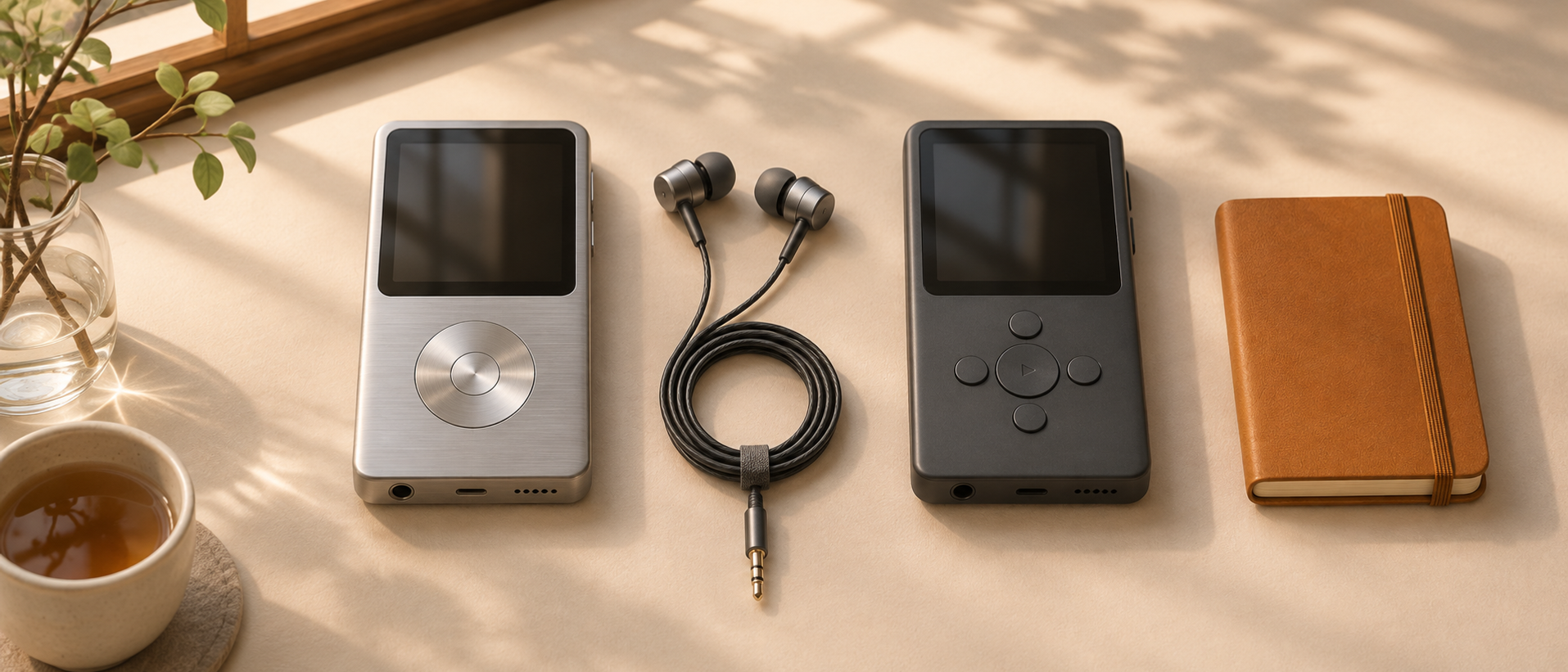
Comparing two portable music players can turn into comparing everything at once: different headphones, different releases of the same album, different settings, and a different mood by the end of the evening.
A useful comparison starts by narrowing the question. Are you choosing something for a walk, for a desk, or for listening to a full album without interruptions? Those are different jobs. A player can be pleasant for one and awkward for another.
This is a comparison method, not a new listening test or a claim that one device sounds better. It is a companion to the iPod and Sony Walkman scorecard.
Choose the decision first
Write one sentence describing the use case: “I want a player I can operate in my pocket while walking” is more useful than “I want the best sound.”
Then choose three or four things that would change your decision. Examples include finding an album, adjusting volume without looking, listening for an entire evening, and copying a new release onto the device. If storage capacity is not constraining your library, it does not need to dominate the comparison.
Keep purchase price, repairability, and availability in a separate decision column. They matter, but they do not describe what you heard.
Keep the listening setup recognizable
Use the same pair of headphones or earphones and the same music files when possible. Record the album release, because a shared song title does not establish that the recordings are identical. Note any equalizer, normalization, crossfade, or other processing settings instead of assuming defaults match.
Do not assume equal volume numbers mean equal output. Set a comfortable listening level; avoid turning either player up to make a difference more obvious. If you cannot verify level matching, say so in the notes and treat small sound impressions cautiously.
You can still learn something from ordinary listening. You just need to describe the limits of the comparison rather than presenting it as a controlled measurement.
Pick short passages for specific questions
Choose a handful of familiar passages. Give each one a purpose: a quiet opening for checking whether unwanted noise is noticeable, a busy section for following a particular instrument, or a voice you know well for describing tonal preference.
Write observations before reaching a verdict. “The vocal feels more forward on this passage” is a listening impression. “This device is more accurate” is a broader claim that the impression alone does not establish.
Leave room for “no useful difference noticed.” That is an actionable result if sound quality was the only reason you were considering a change.
Compare the parts you touch every day
After the short comparison, use each player normally. Find an album from a cold start. Pause and resume it. Try a pocket volume adjustment. Check whether the screen and controls suit the places where you listen.
A compact worksheet keeps the observations separate:
| Question | Player A | Player B |
|---|---|---|
| Can I find the album without frustration? | Observation | Observation |
| Can I operate the controls without looking? | Observation | Observation |
| What settings were active? | Recorded settings | Recorded settings |
| What did I notice in the chosen passage? | Listening impression | Listening impression |
| What interrupted the session? | Observation | Observation |
| Was anything actually measured? | Method and result, or no | Method and result, or no |
Do not turn every row into a numerical score. A single irritating behavior can matter more than several minor advantages, and the weighting depends on your use case.
Treat battery results as their own experiment
An evening without charging is a useful observation. It is not a full battery-runtime measurement.
If runtime is the question, record the starting charge procedure, playback material, volume setting, processing settings, screen behavior, and how the test ends. Keep the original log. Repeat under comparable conditions before drawing a strong conclusion from a small difference.
For an older or modified player, describe the actual unit being tested. A battery result belongs to that configuration and battery condition; it should not silently become a promise about every example of the model.
Write the conclusion at the same scale as the evidence
A good conclusion might be: “For walking, I prefer A because I can pause it and adjust volume by touch. I did not establish a meaningful sound difference with this setup.”
Another might be: “For desk listening, I prefer B’s interface and library navigation. Battery runtime was not measured.”
These are useful conclusions because someone else can see whether your priorities match theirs. Keep the listening notes, the practical decision, and the measurement claims distinct. The comparison becomes easier to trust—and easier to revisit when your listening habits change.

Keep reading
Keep Listening Notes Without Turning Music into Homework
Use a few concrete observations to remember an album and decide what to revisit.
Build a Music Discovery Queue You Will Actually Finish
Separate recommendations from commitments and keep the active listening queue deliberately small.
Back Up the Music Library Around What You Cannot Recreate
Include playlists, metadata, artwork, and configuration alongside the audio files, then test a small restore.
What did you take away?
Thoughts, pushback, or a story of your own? Drop a reply below — I read every one.
Comments are powered by Disqus. By posting you agree to theirterms.